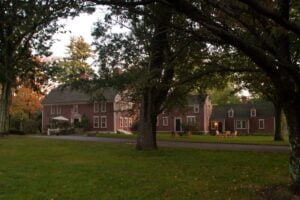
On a crisp, rainy September afternoon I pulled up to the bucolic Wayside Inn, in Sudbury, Massachusetts. The sign post near the road boasts “food, drink and lodging for man, woman and beast.” I hoped I didn’t fit into the last category.
As soon as I entered, a warm welcoming aura enveloped me. The scent of smoky wood burning fireplaces mixed with the aroma of fresh baked bread and pies. The candlelight tavern bustled with activity, as it has for almost 300 years. Patrons were sitting at wooden tables enjoying meals and conversation. A bride and her wedding party stood near the entrance. Waiters and waitresses scooted about with food and drink trays.
The old tap room (part of the original building) overflowed with laughter from guests standing at the colonial cage bar. A cage- bar was standard in 18th-century taverns, used to secure the house whiskey, rum and wine from lodgers unknown to the innkeeper.
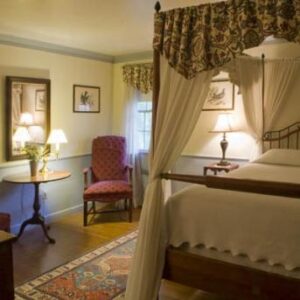
Eight guest rooms lined a wing on the second floor; my room, number seven, rested at the end of the hall. The space was small and rustic, authentic to the colonial era. An antique double bed covered with a white spread filled the room. Two windows were draped with tab curtains. A wooden chair sat in the corner and an armoire awaited guest’s clothing. The end table featured a framed print of Henry Wadsworth Longfellow and the private bath included standard modern fixtures.
Sadly I did not fully experience the Inn’s New England hospitality as family commitments kept me elsewhere. Nonetheless, I relished a good night’s sleep in a place with much ambiance and history.
 The following morning I awoke before dawn, hastily dressing for my 6:30 AM ride to the airport. Everyone else was asleep except for a friendly night watchman, who offered me a cup of coffee and a brief history of the place.
Seems the Wayside is the oldest operating tavern in the US on one of the oldest commissioned roads. David Howe opened the establishment in 1716 as Howe’s Inn, offering provisions for men, their horses and cattle. The renovated old barn rests across the road.
Tradition says Colonel Ezekiel Howe changed the name to The Red Horse, when he succeeded his father in 1746. Colonel Howe led Sudbury farmers to Concord on April 19, 1775, the famous battle that started the Revolutionary War.
After Longfellow published “The Tales of a Wayside Inn’ in 1863, The Red Horse became known as Longfellow’s Wayside Inn, as it remains today.
In 1923, auto maker Henry Ford bought the Inn with the intention of creating a living museum of Americana. The property passed through several trusts and is presently administrated by a non-paid board of trustees dedicated to preserving the historic house and surrounding acreage. All of the Inn’s revenue is used for maintenance and restoration.
I highly recommend Longfellow’s Inn as a way to support cultural heritage and experience the days of Paul Revere and Sam Adams.
If you go:
The town of Sudbury lies close to Lexington and Concord, suburbs of Boston. Visitors find many colonial sites and museums in the area, as well as the birthplaces of early American poets and authors.
The Inn’s multiple-roomed restaurant, open for breakfast, lunch and dinner, serves traditional Yankee fare like Clam Chowder and pot roast.
Make reservations early for one of just ten guest rooms, all individually decorated with country antiques and discreet wireless Internet access. Breakfast included. Single occupancy $104-125, double occupancy $125-175. www.waysideinn.org, 978 443-1776.
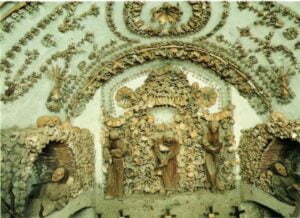 With Halloween approaching, I thought I’d blog about a few of the eeriest places I’ve visited over the years. Without a doubt, the Capuchin Cemetery in Rome, Italy, takes the dubious honor.

 On a crisp, rainy September afternoon I pulled up to the bucolic
 The following morning I awoke before dawn, hastily dressing for my 6:30 AM ride to the airport. Everyone else was asleep except for a friendly night watchman, who offered me a cup of coffee and a brief history of the place.