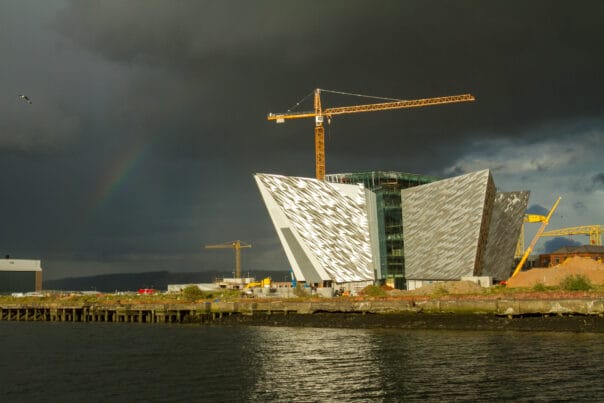
I love when my years of travel suddenly connect like pieces of a puzzle, creating a deeper understanding of a place or moment in history. Such was the case when I was invited to experience Titanic: An Immersive Voyage in Tampa.
More than a century after RMS Titanic slipped beneath the icy North Atlantic, the ship still exerts a powerful pull on travelers. Over the years, I found myself following Titanic’s story across several countries and experiences, from the shipyards of Northern Ireland to the iceberg-filled waters off Newfoundland.
Colonial Williamsburg offers an immersive and meticulously researched window into life in early America. I have returned many times over the years, and each visit deepens my affection for this extraordinary place. I am delighted to share my Colonial Williamsburg travel guide with you and hope it inspires your own journey.
Colonial Williamsburg is the nation’s oldest and largest living history experience, and it remains close to my heart. There are moments when I feel as if I truly belong on Duke of Gloucester Street, moving through the city as it once stood when Williamsburg served as Virginia’s 18th century capital.
A mile-long historic corridor stretches from the 1693 Wren Building at the College of William & Mary to the reconstructed Capitol. This remarkable “Revolutionary City” encompasses 301 acres, including 88 original structuresand hundreds of carefully reconstructed houses, shops, public buildings, and gardens. Skilled tradespeople and costumed interpreters animate the streets, while ongoing research, archaeological digs, and restoration projects ensure the site is constantly evolving.
Visitors wander along car-free lanes or ride by horse-drawn carriage, pausing to watch artisans at their benches and merchants behind shop counters. The craftsmen truly practice their trades—producing goods for sale and items needed throughout Colonial Williamsburg. Guests also encounter the Nation Builders, actor-interpreters who portray influential figures from the city’s past.
These individuals represent real men and women—black and white, free and enslaved—whose lives shaped Williamsburg and the larger story of America. Many Nation Builders devote years to studying their historical counterparts, developing a deep understanding of their voices, choices, and experiences. Ask a question, and they reply in character, sometimes using documented quotations.
The chance to grasp our nation’s early struggles from the fight to break from British rule and the parallel struggle of those held in bondage—offers a powerful reason to visit. History may whisper in many places, but in Colonial Williamsburg, it speaks with clarity and conviction.
However, the destination offers far more than history. Colonial Williamsburg also makes an ideal girlfriend getaway, family vacation, romantic escape (after all, Virginia is for Lovers), and Baby Boomer retreat. Visitors discover a city with fine dining, world-class museums, resort-style lodging, heritage gardens, championship golf, soothing spas, and charming antique shops—plus plenty of walking for those who enjoy exploring on foot.
Add nearby Jamestown Settlement and Yorktown, along with modern attractions like Busch Gardens, and you have a destination that truly offers something for everyone.
Before you go: Planning your Colonial Williamsburg itinerary
Be sure to check out any special events happening during your visit—they abound most seasons.
Save time by purchasing your tickets and making dining reservations online. Also, Viator offers a wide assortment of tours and experiences.
Plan for a minimum of two days for a Williamsburg visit.
While roads circle the historic district, the streets inside the tourist area are closed to traffic. Begin at the Visitor Information Center, where parking is plentiful. You can use the hop-on/hop-off shuttle buses to traverse the perimeter of the historic city, offering multiple stops.
Teens and adults should not miss the introductory movie, Story of a Patriot. Yes, it was filmed in 1957 but restored beautifully. Where else can you catch a view of Jack Lord before his Hawaii Five-O days?
Guide to Colonial Williamsburg: the must-see historical buildings
While there is no right or wrong way to visit Williamsburg, the Capitol building offers an ideal starting point for your Colonial Williamsburg walking tour. What happened within its walls shall we say, brewed discussions leading to discontent, the Revolutionary War, and the eventual formation of the independent United States.
The original Capitol, completed in 1705, functioned as a two-story H-shaped structure, connecting two buildings by an arcade. Each wing served one of the two houses of the Virginia legislature, the Council and the House of Burgesses.
The building burned in January 1747, and a second built on the same site suffered the same fate.
Today’s replica Capitol, on the same foundations and per the same plans, became one of the first sites to open in February 1934. Guided tours start in the General Courtroom, the highest judicial court in the colony.
The bay features stunning woodwork and round windows. In the House of Burgesses, you can see the original 1735 Speaker’s chair. Council and Conference Rooms occupy the second floor.
Before gaining independence, British royal rule in Virginia came locally– a royal governor. A grand brick structure, irreverently nicknamed “the Palace” by colonial subjects, was built in 1714.
The overall design sought to impress visitors with a display of authority and wealth, and it does indeed. The Governor’s Palace became the home to seven royal governors until the last one fled.
Following the Revolutionary War, the structure acted as the executive mansion for the first two elected governors in Virginia— Patrick Henry and Thomas Jefferson. In 1780, the capital of Virginia moved to Richmond.
The main building succumbed to fire in 1781 while in use as a hospital for the American wounded at the Siege of Yorktown.
A tour of the Palace, reconstructed in the early 1930s, takes you through the front door into an entrance hall. You’ll find it lined with an ornate display of swords and muskets. (Many European castles and mansions feature similar presentations.)
The first floor also includes a parlor, dining room, and an office. A grand supper room and ballroom were added to the rear. Their bright blue and vibrant green paint surprises many visitors. According to Kim Ivey, a CW curator, “Every single item installed was done so for a well-documented reason.”
The tour exits into the lavish formal gardens that invite leisurely strolls. The plots incorporate clipped hedges, rectangular parterres, and garden species used in the early eighteenth century.
Stunningly beautiful tulips fill the gardens in the springtime. Other highlights include a tree-shrouded tunnel walkway and boxwood maze that kids (and I) adore. Don’t miss it!
Some 90-acres and 25 smaller gardens remain open to the public around town.
Bruton Parish Church and Graveyard
Burton Parish Church at night. Photo by Debi Lander.
The steepled Bruton Parish Church was designed by Royal Governor Spotswood and completed in 1715. In 1907, this original building became the first structure to undergo restoration.
Rev. Goodwin used this example to convince John D Rockefeller, Jr. to commit funds to bring back the historical city. The big dreams of these two men helped spark the restoration movement around the world.
The Bruton Parish Church and graveyard both invite explorations. Two of Martha Washington’s children rest there.
If possible, attend one of the evening candlelight harpsichord and organ concerts in the sanctuary. It’s hard to describe the lost-in-time feeling that period instruments, candlelight, old pews (maybe a seat George once occupied) create.
The Raleigh is open for tours, not like several others serving today’s guests with period dining, drinking, and music. Learn how the building functioned as an important social meeting place and a tavern for drinking, debate, and lodging.
One room contains a billiard table dating to 1738. Outback lies a large kitchen.
In the summer of 1956, I was a young girl visiting Colonial Williamsburg with my family for the first time. We finished a tour in the Raleigh Tavern when the clouds burst open. We scurried into the rear kitchen building, cramming in with many others.
A delightful aroma of gingerbread baking in the beehive oven surrounded us. The scent became irresistibly enticing, and everyone bought cookies handed over in brown paper sacks.
My cookie was so yummy the memory and smell still linger in my brain. Make sure to buy one or make your own using the recipe in this blog post: Williamsburg Gingerbread Cookies.
You will walk back and forth along the lengthy street packed with homes, taverns, craftsmen, and merchant shops. Look for colorful signs hanging outside that denote the type of craft.
Stop into the 1770 Courthouse and the Powder Magazine, where the town’s artillery was stored. If you haven’t read my story on the Gunpowder Incident in 1775, please find it here. Peruse the outdoor Market Square, perhaps buying a tri-corner hat or sunbonnet.
Turn off the main route onto the Palace Green lined with catalpa trees. It remains one of my favorite places to sit, rest, and contemplate the people who lived here in the past.
If time permits and your legs aren’t too weary, join a guided tour inside the nearby Peyton Randolph House or the brick home of lawyer George Wythe.
A nighttime stroll becomes one of the loveliest ways to absorb the atmosphere along Duke of Gloucester. Lanterns light the way while candlelight glow seeps from house and tavern windows.
If you’re an early riser, meander Duke of Gloucester before it comes alive for the day. The setting evokes a marvelous sleepy feel, especially when foggy. Or consider joining the college students and fitness enthusiasts jogging the mile-long stretch.
The Wren Building at the College of William & Mary
Most first-time visitors don’t get around to touring the Wren Building on the campus of William & Mary. It ranks as the oldest college building in the United States, built between 1695 and 1699, even before Williamsburg’s founding. The college itself was chartered in February 1693 by King William III and Queen Mary II.
At least take a sightseeing drive around the beautiful 1,200-acre campus. The grounds incorporate ponds, bridges, and sunken formal gardens, especially enchanting in spring.
The college’s modern Muscarelle Museum of Art, with 4,000 works, might also be of interest.
Craft Houses/Demonstrations
The craftsmen working their trades fascinate all visitors, young and old. They use 18th-century tools and techniques to apprentice in — and eventually master —woodworking, gunsmithing, or basket weaving, to name a few.
These world-renowned experts make goods for sale or for use by other institutions around the world. They welcome questions.
Children are drawn to the blacksmith, shoemaker, milliner (hat maker), and brickyard. When possible, kids can even create a brick. Did you know the bricks and nails used for Williamsburg reconstructions were handmade there, just like the originals?
Most tourists don’t understand the research behind the authenticity of this destination, rarely found elsewhere. Colonial Williamsburg presents the accurate location and design of homes and buildings where our forefathers lived and worked.
Leave the Wiliamsburg museums for a second day, but explore the expanded joint venture: the DeWitt Wallace Decorative Arts Museum and the Abby Aldrich Rockefeller Folk Art Museum. See colorful and whimsical collections of toys, portraits, weathervanes, and much more in the Folk Art Museum. I could spend hours in these.
Take time to appreciate the beautifully crafted furniture, musical instruments, home goods, textiles, and artworks in the DeWitt Wallace. Don’t miss the famous Charles Wilson Peale portrait of George Washington. The site includes a fantastic gift shop and convenient café.
Anticipating Williamsburg? Turn those plans into reality!
Lodging: Enjoy a charming stay in Williamsburg with Booking.com. Choose from historic inns to modern hotels that reflect the area’s rich colonial history. It costs a bit more to stay in the historic district, but being able to wslk to everything becomes a big plus.
Entertainment: Step back in time with Viator in Williamsburg! Explore reenactments and historical sites that bring American history to life in this iconic colonial town.
Although the food served in the taverns traces back to similar fare cooked by colonists, the preparation takes place in modern kitchens. The servers, however, are dressed in period clothing.
The dishes, flatware, and goblets are authentic reproductions of 18th-century items. Minstrels frequently provide musical entertainment. Look forward to tasting Peanut Soup, Sally Lunn bread, Brunswick Stew, or a syllabub.
To get the true feel for this historic city, I suggest you overnight in one of the Colonial Homes. I’ve done this three times, and each experience felt different, fun, and oh so memorable.
You choose between stand-alone colonial houses or a private room within a larger colonial home, known as a Tavern Room. Meticulously reproduced spaces resemble the period but with modern amenities. Rentals usually come with an admission pass.
My favorite lodging experience was spent in the Robert Carter Kitchen, tucked behind the house next to the Palace. I stayed there with my two daughters, and our little room was enchanting.
A Carriage Ride on the streets of Colonial Williamsburg. Bylandersea
We could overlook grazing sheep, and the Palace illuminated at night. I reserved the last carriage ride of the day, and the driver dropped us off in front of “our” house! Talk about a memory.
Those looking for five-star and AAA Five-Diamond luxury should choose the iconic Williamsburg Inn. Many presidents and even the Queen of England have slept there.
No worries, if you can’t afford the rates, drop in and tour the property. Consider indulging with an extraordinary breakfast in the elegant Rockefeller Room or lunch in the Terrace Room overlooking the golf course.
The Williamsburg Lodge (now part of the Marriott Autograph Collection) offers a relaxing retreat, just steps away from all the action.
Williamsburg Woodlands becomes an excellent choice for a family. It conveniently rests next to the Visitor Center.
Nature surrounds the newest lodge, the Griffin Hotel, but it sits out of the historic district.
Other options not managed by Colonial Williamsburg include the sprawling Kingsmill Resort or the family-friendly Great Wolf Lodge.
More things to do in the Williamsburg area
Spa
Treat both your mind and body to a rejuvenating experience at The Spa (official website). Arrive early for your treatments and linger afterward to enjoy steam rooms, showers, and whirlpools, as well as the relaxation lounges.
Golf
Take your pick of 45-walkable holes over three courses at the Golden Horseshoe Golf Club designed by Robert Trent Jones and his son Rees Jones.
I never miss browsing the goods in Prentis, Greenhow, and Tarpley’s, my favorite shops within the historic district. The Prentis Store showcases wares constructed using 18th-century techniques. Choose between handcrafted leather goods, iron hardware, tools, pottery, writing instruments, papers, ink, and seals.
The J. Greenhow General Store sells gifts, books, candy, historical items, toys, and trinkets. Their selection includes items imported from England for the colonists, like the delicate creamware dishes.
Tarpley’s, Thompson & Company, another fine shop, offers clothing, hats, and many of the above items.
Merchant’s Square
You will undoubtedly run into the area between the college and the historic car-free zone known as Merchants Square (official website). Hard to resist this retail village with over 40 modern-day shops and some fabulous restaurants, like the Blue Talon Bistro.
Be sure to check out the college bookstore or other stores selling souvenirs.
In the 18th century, illuminations — the firing of guns and lighting of fireworks — celebrated major events such as the birthday of a reigning sovereign, military victories, or a new colonial governor.
Williamsburg’s Grand Illumination began in 1935 with holiday candles in windows and fireworks. In the years that followed, the Grand Illumination became such a popular event that it expanded to three weekends.
Friday evenings introduced a new event, the Yule Log procession. It includes music from the Fifes and Drums, musket fire from Continental Army reenactors, and a visit from Father Christmas.
During a torch-lit march, the Yule Log progresses by wagon from the Capitol to Market Square. It then burns in a bonfire where guests gather to throw greenery sprigs into the fire and make a wish.
A grand display of fireworks is set off simultaneously rising above the Governor’s Palace and the Capitol on Saturday evenings.
Wreaths made from natural greenery with intricate designs of fruits, nuts, and pinecones decorate doorways and balconies. The homeowners and merchants go all out, hoping to win the annual local contest.
Having grown up in Northern Virginia, I am always excited to return to Williamsburg, one of my favorite places in the world. I look forward to dining in a colonial restaurant, shopping for handcrafted items, sitting in colorful gardens, and just soaking in the 18th-century ambiance.
Yes, Virginia is for lovers, and I do love Williamsburg.
How to get to Williamsburg, Virginia
Williamsburg lies 150 miles south of Washington, D.C., midway between Richmond and Virginia Beach on Interstate 64. Jamestown, Williamsburg, and Yorktown make up the three corners of Virginia’s Historic Triangle. A 23-mile Colonial Parkway connects the sites.
Before George Washington became the steadfast commander of the Continental Army and America’s first president, he was a young officer seeking glory on the rugged frontier. His first experience in battle, during the French and Indian War, brought not fame but failure. Yet those early trials would shape his sense of leadership and the destiny of a nation.
Washington’s Lesson in Humility
In 1754, twenty-two-year-old Washington led a small Virginia regiment into the wilderness of western Pennsylvania. Britain and France both claimed the Ohio Valley, and tensions teetered on war. Acting under vague orders, Washington’s men ambushed a French scouting party, a rash decision that resulted in the death of a French officer and escalated the global conflict.
George Washington as First Colonel in the Virginia Regiment, Charles Willson Peale, oil on canvas, 1772 [U1897.1.1]. Gift of George Washington Custis Lee, University Collections of Art and History, Washington & Lee University, Lexington, Virginia
Washington hastily built Fort Necessity, a crude stockade meant to hold off French retaliation. But he was soon surrounded by a superior force of French soldiers and Native American allies. Torrential rain drenched the gunpowder and the morale of his men. Facing certain defeat, Washington surrendered. Worse yet, the surrender document, written in French, contained an admission of “assassination,” tarnishing his reputation abroad.
The humiliation at Fort Necessity taught Washington the lessons of command: humility, caution, and the weight of responsibility. He never again signed a document he could not read, and he emerged from the disaster more determined, more disciplined, and wiser. Those traits would serve him well when called again in the future.
Do You Know?
Washington’s surrender at Fort Necessity in 1754 marked the only time he ever capitulated in battle. That single mistake helped ignite the French and Indian War, a conflict that spread across the globe as the Seven Years’ War and laid the groundwork for the American Revolution that followed.
Raised by His Mother’s Strength
Portrait of Mary Ball Washington attributed to Robert Edge Pine (c. 1786) as listed on Wikimedia Commons and in the public domain.
George’s character was forged long before his military career began. His father, Augustine Washington, died when George was only eleven years old. The loss profoundly affected him, leaving his mother, Mary Ball Washington, to raise five children largely on her own.
Mary was a woman of strong faith and even stronger will. She managed the family’s Ferry Farm plantation near Fredericksburg, teaching her son self-reliance, frugality, and moral resolve. Without the wealth or connections that might have come from an English education, George instead learned practical skills in surveying and agriculture. These experiences grounded him in the realities of the Virginia frontier.
After his youth in Fredericksburg, George often visited his older half-brother, Lawrence Washington, at his home overlooking the Potomac River, the estate we now know as Mount Vernon. Lawrence, a cultured and worldly man who had served with the British Navy, introduced young George to Virginia’s gentry and instilled in him an admiration for military discipline and public service.
When Lawrence died of tuberculosis in 1752, George, then age 20, inherited Mount Vernon. The property became not just his home but his lifelong refuge, a place of reflection after the Revolution and a symbol of his devotion to the land he loved.
Oil on canvas from The National Gallery of Art in the public domain.
The Fredericksburg Connection
To understand Washington’s foundations, visit Fredericksburg, Virginia, a town where his youth, family, and values still echo.
At George Washington’s Boyhood Home at Ferry Farm, visitors can walk the same bluff that overlooks the Rappahannock River and tour the reconstructed farmhouse that represents his early life. Archaeological finds tell stories of the Washington family’s daily routines, from farming tools to fragments of china, offering glimpses into the world that shaped a future president.
Across the river lies the Mary Washington House, purchased by George for his widowed mother in 1772. This modest home is filled with 18th-century furnishings and memories of a strong woman whose influence on her son was immeasurable.
A short walk leads to Kenmore, the elegant Georgian mansion built by Washington’s sister, Betty Washington Lewis, and her husband, Fielding Lewis. At the time they built the estate, they were wealthy and the house was designed to show their status. The plaster ceilings in Kenmore are among the finest in America, and every room reflects the refinement of Virginia’s elite. But Fielding’s story is one of sacrifice. He invested nearly his entire fortune in supplying the patriot cause during the Revolution. The debts he incurred crippled his estate, and he died before seeing independence realized. The family remained, but never lived a lavish lifestyle. His devotion stands as a quiet monument to the financial and personal costs of liberty.
Nearby, the Hugh Mercer Apothecary Shop offers a fascinating window into colonial medicine, with demonstrations of leeches, lancets, and herbal remedies that once treated the town’s residents.
Just a few blocks away, the Rising Sun Tavernoffers another glimpse into 18th-century life. Built in 1760 by George’s younger brother, Charles Washington, the structure originally served as his private home before being converted into a tavern in the 1790s. The Rising Sun quickly became Fredericksburg’s social hub, a place where locals, travelers, and politicians gathered to exchange news and debate the issues of the day.
Today, costumed interpreters recreate the lively atmosphere of a colonial tavern, complete with wooden tankards, candlelight, and tales of Revolutionary-era gossip. The building’s original timbers and brick hearths remain intact, allowing visitors to step back into the era when the colonies buzzed with ideas of liberty and independence.
The tavern connects perfectly with the broader Washington story. It reflects the entrepreneurial spirit of the family and the growing identity of Virginia as a place where both ideas and independence took root.
Reflections on the Path to Greatness
In Fredericksburg, you trace the beginnings of George Washington’s strength, from the heartbreak of losing his father and the stern love of his mother to the mentorship of his brother and his lessons in failure. Here, the man behind the myth becomes real: ambitious yet humble, proud yet disciplined, and forever molded by family and place.
A visit through this region is more than a history lesson. It is a journey into the making of character and country.
George Washington’s Ferry Farm 268 Kings Highway, Fredericksburg, VA Open daily (seasonal hours vary). Tours, museum exhibits, and walking trails. Website: www.kenmore.org/ferryfarm
Mary Washington House 1200 Charles Street, Fredericksburg, VA Open Wednesday through Monday. Guided tours highlight Mary’s later life and her relationship with George. Website: www.washingtonheritagemuseums.org
Kenmore 1201 Washington Avenue, Fredericksburg, VA Open daily for tours. The home of Fielding and Betty Washington Lewis includes gardens and museum exhibits. Website: www.kenmore.org
Hugh Mercer Apothecary Shop 1020 Caroline Street, Fredericksburg, VA Living-history interpreters demonstrate 18th-century medical practices. Website: www.washingtonheritagemuseums.org
Rising Sun Tavern 1304 Caroline Street, Fredericksburg, VA Built by Charles Washington in 1760 and later converted into a tavern, the site recreates 18th-century hospitality and conversation. Website: www.washingtonheritagemuseums.org
Fort Necessity National Battlefield 1 Washington Parkway, Farmington, Pennsylvania Step onto the site of George Washington’s first military engagement and only surrender. The National Park Service site preserves the battlefield where Washington’s 1754 skirmish with the French ignited the French and Indian War. Visitors can explore the reconstructed Fort Necessity, a museum with exhibits on colonial frontier life and the global Seven Years’ War, hiking trails through the Great Meadows, and the nearby Mount Washington Tavern, once a stop on the National Road. Website: www.nps.gov/fone